Wardogs Season 2 Rain Changes Everything
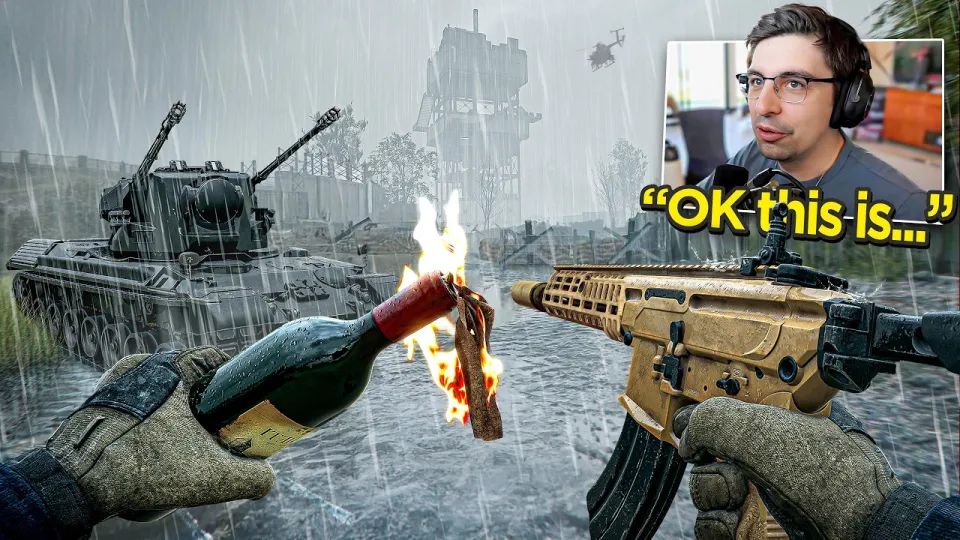
Video: Wardogs Is a Completely Different Game Now...
Want articles like this for your own video to promote it on YouTube and Google? Order them through the Telegram bot @sat_sit_bot. It writes articles around your video, embeds the video and publishes them on popular niche websites (no ads). Your first 50 articles are free.
· based on the channel shroud
Wardogs is an extraction shooter where squads fight over loot and exfil points, and Season 2 has turned it into a noticeably different game thanks to heavy rain. The new weather system cuts visibility, muffles sound cues and shifts fights toward close ranges, so players who learned the map in clear conditions need to relearn their routes and engagement distances. The season also arrived alongside a companion audio show you can follow via the shroud Spotify podcast for more session breakdowns.
What the Wardogs rain actually changes
The rain is not a cosmetic filter; it is a mechanical modifier that touches three systems at once. First, contrast drops across the whole map, so silhouettes at range blur into the terrain and a target standing still becomes genuinely hard to pick out. Second, ambient noise from the storm masks footsteps and reloads, which makes sound-based information less reliable in open areas. Third, wet surfaces and darker lighting push players toward interiors, stairwells and rooftops where the fight is decided in the first two seconds.
Practical effects players will notice immediately:
- Long-range duels become a gamble — reports from the community put the practical visibility limit at roughly 190 meters even on clear sightlines.
- Sniping loses much of its value, because holding an angle across an open field rarely pays off in a downpour.
- Close-quarters weapons and high-rate-of-fire SMGs become more attractive than scoped rifles.
- Rotations get slower and louder in the wrong ways: squads bunch up in buildings instead of spreading across open ground.
Why armor and HP ammo matter more in the storm
Because fights happen at shorter range and often start with a surprise contact, the ammunition you load decides the outcome more than the optic on your rifle. Armored opponents absorb torso and head hits from standard rounds, so the reliable answer is high-penetration or expanding ammunition aimed at the legs, which are typically unprotected. A common mistake in squad play is calling out the correct instruction and then watching a teammate dump a full magazine into a chest plate, conclude the weapon is terrible, and blame the gun instead of the ammo choice.
The practical checklist for a rain-season loadout:
- Carry at least one magazine of HP or high-damage rounds for armored contacts.
- Aim low by default in close fights; leg damage stacks fast and drops a target before the plate breaks.
- Repack magazines before entering a building, not while falling off a ladder or mid-push.
- Keep a backup automatic weapon for interiors; bolt-action and DMR platforms lose value in low contrast.
Visibility, optics and the sniping problem
Rain effectively deletes the long-range layer of Wardogs, and that is the change most experienced players argue about. Thermal and infrared optics become stronger in poor weather because they separate a warm body from a cold, rain-soaked background, while traditional magnified scopes suffer from the loss of contrast. If you built your kit around holding a 300-meter lane, the storm forces a rebuild toward mid-range optics, wider fields of view and faster target acquisition.
A workable adaptation plan:
- Swap your primary to something usable inside 100 meters.
- Attach a low-power or 1x optic with a clean reticle rather than high magnification.
- Use the rain as cover for rotations along open ground; the enemy's ability to spot you drops as much as yours does.
- Treat rooftops and towers as temporary positions, not holds — the moment you fire, the muzzle flash gives you away.
Squad coordination beats lobby size
A recurring observation from the gameplay is that a large lobby is not the same as a coordinated enemy. Twenty unaffiliated players scattered across a map behave very differently from six friends in one voice channel sharing callouts, crossfires and loot. The rain amplifies that gap: when vision is short, information from teammates replaces what your eyes can no longer confirm, and a squad that talks constantly will find and finish fights that a silent group of equal size will lose.
What actually wins rain fights:
- One person calls the contact, everyone else confirms before shooting.
- Split into pairs rather than a single stack; a five-man blob in a stairwell is one grenade from disaster.
- Assign a dedicated rear guard during rotations, since sound cues are unreliable.
- Clear the building you were just shot from before looting anything inside it.
Common mistakes players keep making
Most deaths in the new weather come from habits built in clear conditions. Players hear a shot from a window, walk inside, open the inventory to repack, and die to the same shooter — the information was correct, the response was not. Others push a compound without checking the roof, or hold an angle at 200 meters that the rain has already erased from existence.
The most frequent errors, in order of cost:
- Looting or managing inventory while a known threat is still alive nearby.
- Ignoring leg shots against armored targets and blaming the weapon.
- Holding long sightlines that no longer exist in the storm.
- Pushing a building alone after being hit from it, instead of resetting and approaching with a teammate.
- Forgetting that the storm hides enemy rotations just as well as it hides yours.
Where to follow the Wardogs sessions
If you want more of this gameplay, the shroud channel is the source of the breakdown, with full sessions covering the rainy season and the squad's reactions to each new condition. The channel also links its companion audio content, the creator's social accounts and hardware partners used during streams.
The bottom line on Wardogs Season 2
The rain has converted Wardogs from a game about long sightlines into a game about information, ammo choice and who is talking on comms. Sniping is the biggest loser, thermal optics and HP rounds are the biggest winners, and squads that coordinate will keep beating larger groups that do not. Adapt your kit toward close range, aim for the legs on armored targets, and clear the building before you touch the loot. For more of the same sessions, the shroud channel covers the season as it evolves, and you can follow the companion show through the Spotify podcast link.
Key takeaways
- Wardogs Season 2 introduces heavy rain as a dynamic weather condition that reshapes visibility and combat pacing.
- Rain sharply reduces long-range visibility, with targets becoming hard to spot even around 190 meters.
- HP ammunition is the counter to armored targets: leg shots with expanding rounds bypass most plate protection.
- Thermal and infrared optics gain value in rain because they cut through the reduced contrast.
- Group size matters: a coordinated squad on comms has a structural edge over larger but uncoordinated lobbies.
Source: Wardogs Is a Completely Different Game Now... · Markdown version
Questions & answers
Does the rain in Wardogs Season 2 make the game harder or easier?
It makes it harder in a specific way: visibility drops sharply, sound cues become unreliable and long-range fights stop paying off. Players who adapt with close-range weapons and coordinated callouts actually find the storm useful, because it also hides their own rotations.
Why do players say a gun is bad after losing a fight in Wardogs?
Usually the problem is ammunition, not the weapon. Armored targets absorb standard torso hits, so the correct play is to load HP or high-penetration rounds and aim at the legs, which are typically unprotected. Firing a full magazine into a chest plate and then blaming the gun is the classic error.
Is sniping still viable in Wardogs with heavy rain?
Only marginally. Reports put practical visibility at roughly 190 meters even on open ground, which removes most of the value of high-magnification scopes. Thermal and infrared optics are the exception, since they separate bodies from a cold, wet background far better than standard glass.
Why does a coordinated squad beat a bigger lobby in Wardogs?
Twenty unaffiliated players do not act as a team, while six friends on one voice channel share callouts, crossfires and loot. In rain, where your own eyes confirm less, teammate information replaces vision, so the talking squad consistently finds and finishes fights first.